

Pressure Injury Prevention
Empowering the Frontline: Alleviating Pressure for Patients and Clinicians Alike
September 2, 2026 · 9 min read · Mountain American Medical Technology
Clinicians in both acute and post-acute care environments are facing a crisis of physical and emotional exhaustion. Recent surveys reveal that 74% of nurses report feeling emotionally drained from work multiple times a week. But this burnout isn't just a byproduct of long hours—it is deeply rooted in the physical toll of patient care and the mental frustration of working without the right tools.
Nowhere is this more evident than in the standard practice of turning patients every two hours to prevent pressure injuries. This protocol is a cornerstone of care, but it places an immense, often unsustainable burden directly on the clinician's shoulders. It is time we shift the conversation away from administrative mandates and focus on true empowerment: giving clinicians the technology and equipment they need to protect their patients and themselves.
74% of nurses
The Physical Hardship: A Fast Track to Burnout and Injury
Turning large, immobile, or highly complex patients every two hours is grueling work. The healthcare sector currently leads all industries in nonfatal workplace injuries. Shockingly, 59% of injuries among direct care staff are directly tied to patient-handling activities, including repositioning and transferring. Furthermore, 44% of all worker-reported injuries in healthcare are attributed to overexertion.
The National Institute for Occupational Safety and Health (NIOSH) recommends a maximum lifting weight of just 35 pounds. In an acute or post-acute setting, moving a bariatric patient or an uncooperative patient vastly exceeds this limit. Clinicians are routinely risking severe musculoskeletal damage, leading to workers' compensation claims, chronic pain, and early exits from the profession. When a nurse strains to reposition a patient without the appropriate support equipment, they aren't just risking a temporary ache—they are risking their livelihood and career.
59% of injuries
The Guessing Game of Pressure Relief
Beyond the physical danger, there is a profound psychological frustration embedded in the current standard of care. When a clinician exerts the monumental effort required to turn a patient, there is often no objective way to know if they have actually solved the pressure issue.
You do the heavy lifting, you reposition the patient, and you hope the offloading was successful. But without visibility, pressure management remains an invisible challenge. Clinicians are left guessing whether the sacrum, heels, or shoulders are still bearing dangerous levels of pressure. Caregivers are being held accountable for preventing hospital-acquired pressure injuries, yet they are forced to operate in the dark.
Seeing the Invisible: The Wellsense VŪ Pressure-Mapping Pad
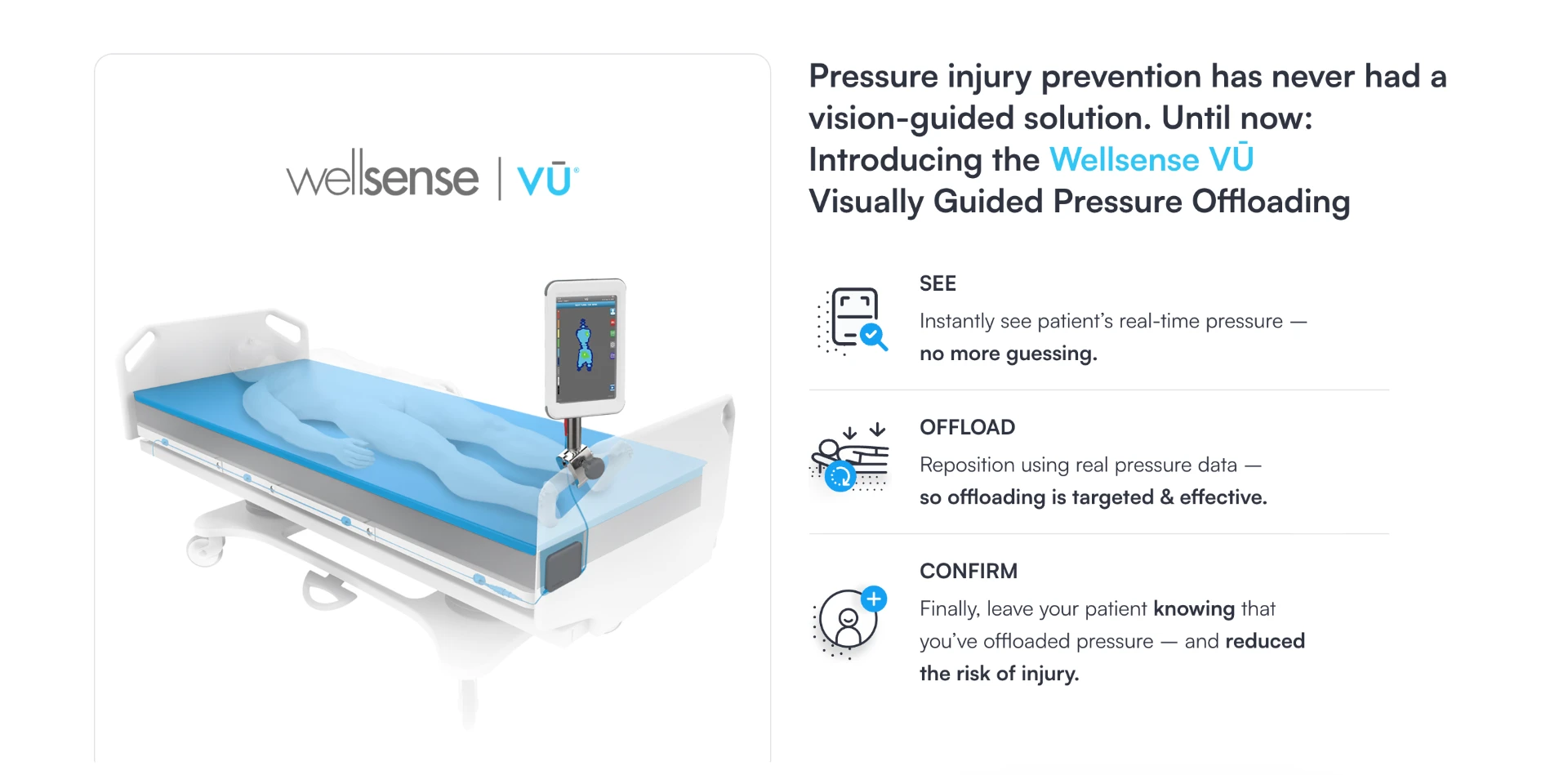
True empowerment means giving clinicians actionable data. Because facilities can rent the Wellsense continuous pressure-mapping pads rather than replacing entire beds, it is easier than ever to make the invisible visible.
Instead of guessing if a turn was effective, nurses can look at a live, color-coded visual monitor that shows exactly where a patient is experiencing high interface pressure. With this technology, clinicians no longer have to perform unnecessary, physically demanding turns if the patient's pressure is already safely distributed. Conversely, if a patient is turned but the monitor still shows high pressure on a vulnerable area, the clinician can make immediate micro-adjustments. This eliminates the guesswork, validates the clinician's hard work, and ensures that the physical effort expended actually solves the problem.
Explore the Wellsense PadTrue Offloading for the Most Challenging Patients: The Joerns Dolphin Surface
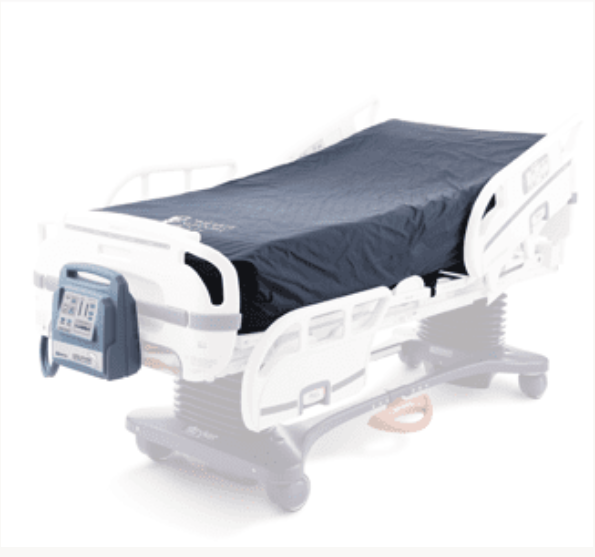
Even with perfect visibility, some patients are simply too large, too fragile, or too immobile for traditional turning protocols to be safe or effective. For these highly challenging patients, clinicians need equipment that actively works for them, rather than against them.
The Joerns Dolphin surface mattress is critical for these exact scenarios. Utilizing advanced fluid immersion simulation, the Dolphin system dynamically adjusts to a patient's weight and three-dimensional profile, effectively eliminating pressure points and maintaining near-normal blood flow. By placing a high-risk patient on a Dolphin surface, the mattress takes on the heavy burden of pressure redistribution.
For the clinician, this means a massive reduction in the physical hardship of manual repositioning. It mitigates the risk of catastrophic back injuries and workers' comp claims by ensuring that the clinician isn't fighting a losing battle against gravity and sheer weight without the right equipment.
Explore the Dolphin SurfaceAlleviating the Pressure Together
Burnout cannot be solved by simply asking clinicians to be more resilient; it is solved by providing them with action-oriented solutions. In acute and post-acute care environments, alleviating pressure is a dual mandate: we must alleviate the physical pressure on the patient's skin, and we must alleviate the physical and mental pressure on the clinician.
By adopting technologies like the Wellsense View Map to provide visual confirmation of pressure relief, and utilizing the Dolphin surface mattress to support the most challenging patients, we put control back into the hands of the caregiver. Empowering clinicians means giving them the visibility to know their interventions are working and the equipment to ensure they don't have to break their own bodies to provide exceptional care.